Developing the oil sands
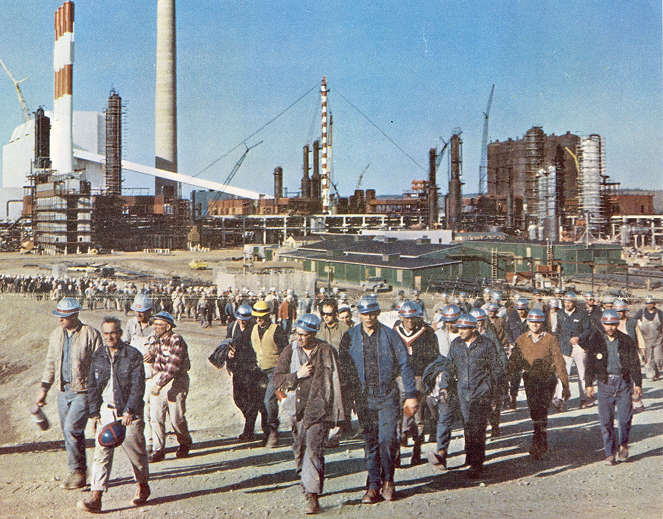
Commercial development of the Alberta oil sands didn’t begin until 1967. That’s largely because bitumen is thick and viscous, making it difficult to get out of the ground. To further complicate matters, bitumen occurs naturally in a mixture of sand, clay or other minerals and water. For these reasons, traditional techniques can’t be used to extract bitumen.
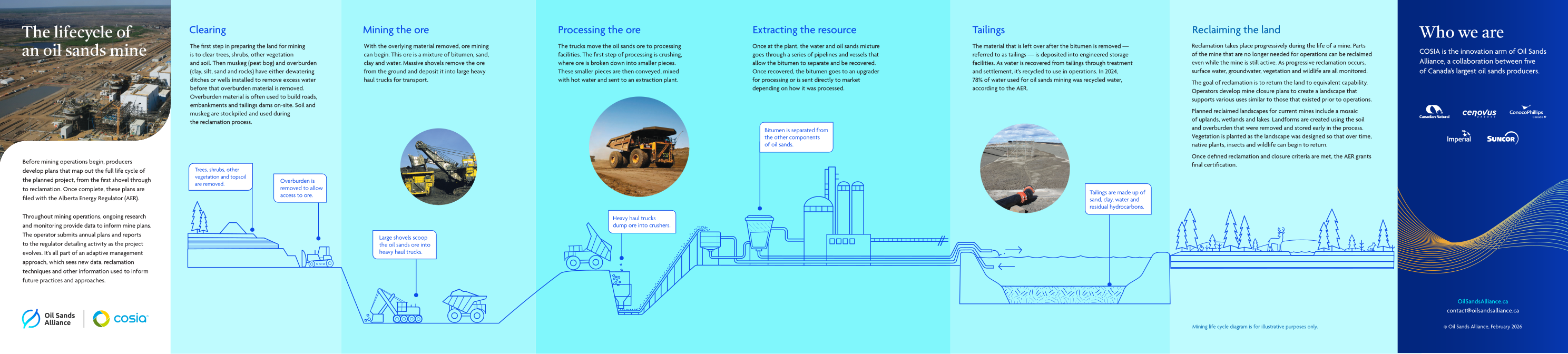
Mining
About 20% of Alberta’s oil sands deposits are close enough to the surface to be mined. The bitumen is then separated from the rest of the oil sands using a hot water method that was patented in the 1920s by Dr. Karl Clark of the University of Alberta. Learn more about mining below.
SCROLL TO EXPLORE
In situ
For the oil sands deposits that are too deep underground to mine, specialized steam technologies are needed. Steam is injected into the underground reservoir, heating and softening the bitumen so it can be brought to surface. Cyclic steam stimulation (CSS) and steam-assisted gravity drainage (SAGD) are two of the technologies used for in-situ (in-place) extraction. These are crucial technologies because about 80% of the oil sands are deep underground. Learn more about each technology below.
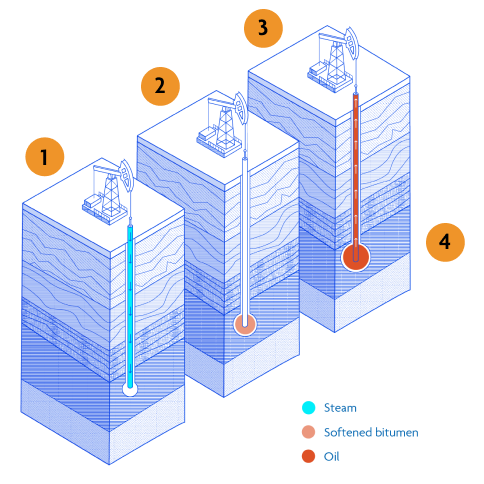
Cyclic steam stimulation (CSS)
- A vertical well is drilled deep underground into the bitumen formation. Steam is injected into the well to help soften the bitumen.
- Steam is left to “soak” in the underground formation until the bitumen is soft enough to flow.
- The same well is then used to bring the bitumen and condensed steam mixture to the surface.
- New steam is then injected to begin a new cycle when oil production rates fall below a critical threshold caused by the cooling of the reservoir.
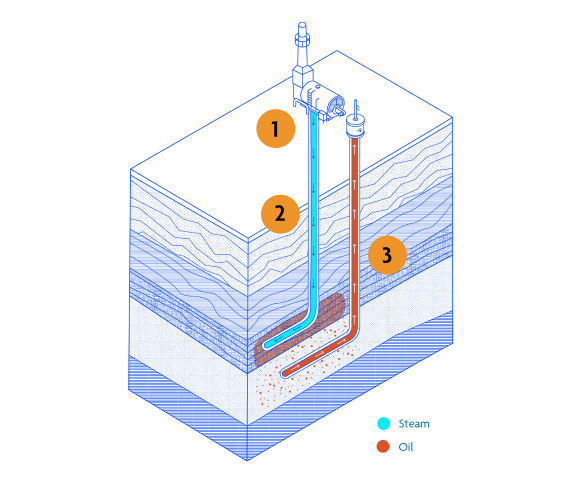
Steam-assisted gravity drainage (SAGD)
- Two horizontal wells are drilled deep underground into the bitumen formation.
- Steam is injected into the top well to help soften the bitumen in the surrounding reservoir.
- As the bitumen softens, gravity causes it to flow into the bottom well, where it is brought to the surface.
- The resulting substance is a mixture of oil and condensed steam, which is sent to a plant for separation and treatment. The separated water is reused to create steam in the SAGD process.