Big challenges and great people: Career highlights from COSIA’s Tailings Director
February 24, 2026
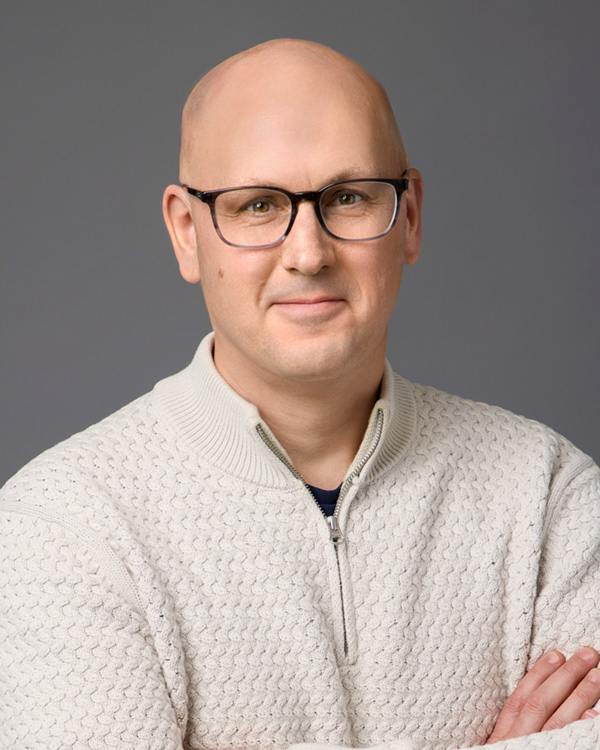
Growing up in the rural town of Lewisporte, Newfoundland, with a population of roughly 4,000, Paul Morris had the freedom to explore, try things out, and navigate challenges with a strong sense of possibility. That upbringing instilled a level of confidence to tackle big problems, believing that nothing is impossible. Today, as COSIA’s Director of Tailings, Paul brings that same big-picture thinking and creativity into one of the most complex and important areas of environmental innovation in Canada’s energy sector.
Paul’s path to COSIA, the innovation arm of Oil Sands Alliance, wasn’t linear, but was guided by curiosity, a deep commitment to collaboration, and a love of tough challenges. He chose Memorial University of Newfoundland, not for prestige but for practicality:
“It was the only university in the province, and the cheapest option.”
After graduating, Paul launched into a career in the oil and gas industry that has spanned 28 years. He spent the first seven years in conventional oil and gas in Western Canada and the East Coast, followed by 19 years in in-situ oil sands, which shaped his technical foundation in reservoir characterization, reservoir engineering, and technology development.
Those years of experience were the perfect training ground for his eventual role at COSIA. During his last six years at Suncor, Paul served as the company’s representative on COSIA’s Innovation Plus committee, a role that gave him visibility into the depth of collaboration and ingenuity across Oil Sands Alliance and COSIA members.
“I’ve learned how to frame and tackle challenges in ways that members can relate to.”
When his time at Suncor came to an end, he received a call from Wes Jickling, Vice President, Technology Development & COSIA, who invited him to support the team as a consultant. By late 2024, Paul stepped fully into the Tailings Director role, where he continues to exercise his collaborative approach to innovation.
Among his proudest achievements is helping the Mine Closure Technical Working Group cross the finish line; a complex, multi-year collaboration of industry experts focused on identifying technical risks in oil sands mine closure to support more effective and responsible closure planning. His steady leadership helped the group complete its work, a milestone that will support industry progress for years to come.
For Paul, the best part of his job is simple: the people.
“Robyn, my Senior Technical Advisor, is fantastic, I really enjoy my Oil Sands Alliance co‑workers, and I get to work with so many wonderful folks from our member companies,” he reflects.
Big problems and great people; that’s the combination that keeps him energized.
Outside of work, Paul is a traveler, an avid cyclist, and, to many people’s surprise, a two‑time grandpa. Despite being highly extroverted, he also admits to a “pathological aversion to public speaking,” which only makes him more relatable.
Looking ahead, Paul is focused on advancing projects that drive real value for members, even amid industry-wide pressures to reduce costs and balance short‑term shareholder expectations with long‑term innovation. His hope for the future is grounded and optimistic: a thriving Canadian energy industry, one that continues deepening its commitment to environmental innovation.
Paul’s guiding philosophy comes from a lesson he calls ‘fishes and trees’, inspired by a quote about judging people by the wrong metrics: Everyone is smart in different ways. If you judge a fish on its ability to climb a tree, it will spend its whole life thinking that it’s stupid1.
“Most of the time, each of us is trying to do our best,” he says. “If you start from that assumption, you can engage people where they are and move forward together.”
It’s a fitting philosophy for someone whose career has been defined by exactly that: bringing people together, solving hard problems, and building a better path forward, one challenge at a time.
- Lynda Mullaly Hunt, Fish In A Tree ↩︎