September 2026
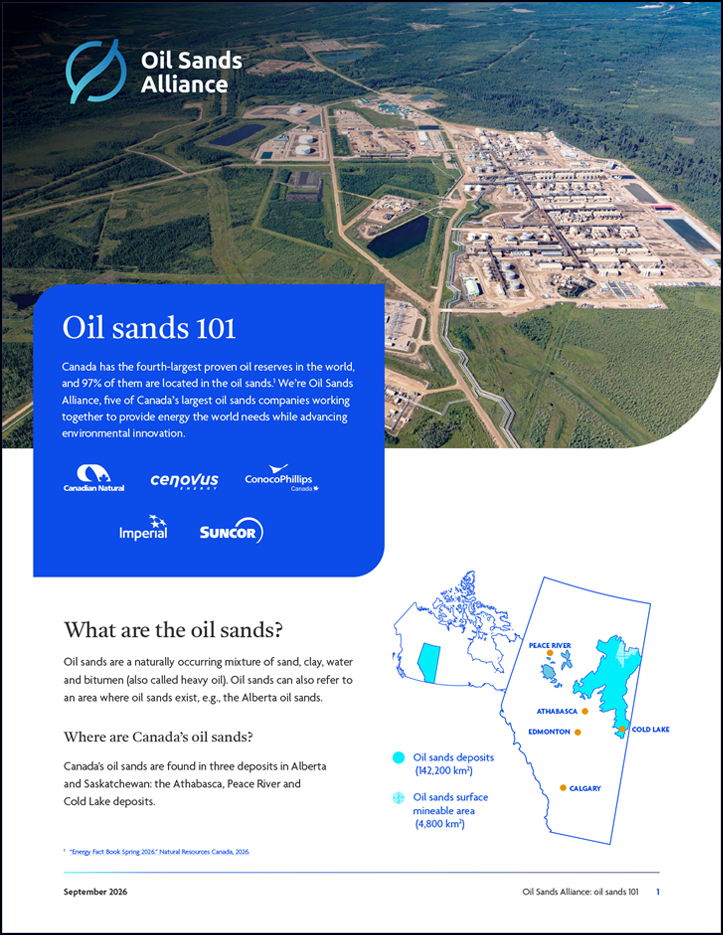
Oil sands are a naturally occurring mixture of sand, clay, water and bitumen (heavy oil). Canada holds the fourth-largest oil reserves in the world, and 97% of these reserves are located in northern Alberta’s oil sands (Source: “Energy Fact Book, Spring 2026.” Natural Resources Canada, 2026). These resources contribute to global energy supply.
How oil is produced from oil sands
Producing oil from oil sands requires specialized techniques because bitumen is mixed with sand and clay. It is also thick and does not flow easily. Two primary recovery methods are used:
- Mining – When deposits are close enough to the surface, oil sands are mined and hot water is used to separate bitumen from sand and clay.
- In-situ extraction – Technologies such as steam-assisted gravity drainage (SAGD) and cyclic steam stimulation (CSS) inject steam underground to heat bitumen so it can be pumped to the surface.
Emissions sources
Oil sands operations produce emissions primarily from natural gas, used to generate steam and heat water for extraction, as well as from equipment and tailings ponds.
Environmental innovation
COSIA is the innovation arm of Oil Sands Alliance, and it is focused on collaborative action and innovation in oil sands environmental technology.
This fact sheet covers:
- What the oil sands are, why they’re needed and where Canada’s major deposits are located
- How bitumen is recovered using in-situ extraction and surface mining technologies
- Environmental innovation and collaboration through COSIA
- Consultation, engagement and economic partnerships with Indigenous groups and local communities