August 2026
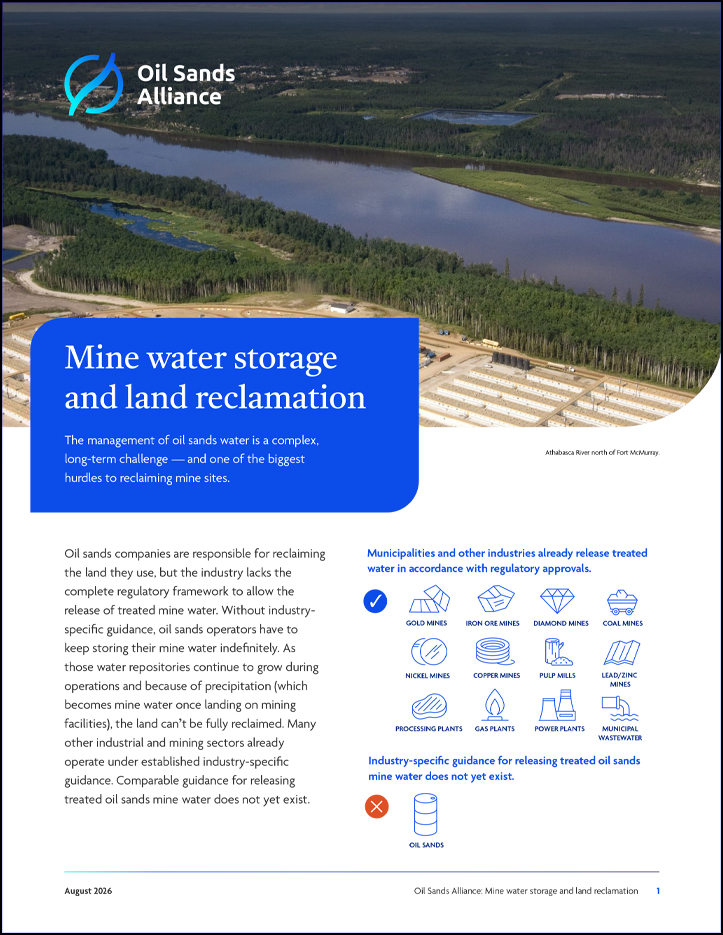
The management of oil sands mine water is one of the biggest hurdles to reclaiming mine sites. Oil sands companies are responsible for reclaiming the land they use, but the industry lacks the complete regulatory framework to allow for the release of treated mine water. Without industry-specific guidance, mine water must continue to be stored on site, preventing land from being fully reclaimed.
Mine water is any water that has been used in mining or has come into contact with a mine, including precipitation. During extraction, oil sands ore is mixed with hot water to recover bitumen. The material left after extraction — including water, sand, clays, salts and trace hydrocarbons — is called tailings and is pumped into tailings facilities. Water separated from the tailings is recycled back into the extraction process. In 2024, 78% of water used for oil sands mining was recycled water (Source: “Alberta Water Use Performance Report.” Alberta Energy Regulator, 2025). But as mining winds down, recycling stops being a viable way to manage stored water and volumes continue to grow.
Proven technologies for treating oil sands mine water exist today. The industry is working with governments, regulators, Indigenous communities and other stakeholders to advance a framework for the safe release of treated mine water to support fully realized land reclamation.
This fact sheet covers:
- What oil sands mine water is and how it’s managed during mining
- The lack of industry-specific guidance for treated mine water release
- The limits of long-term water storage
- Facts about treatment, safe release and environmental monitoring