Career highlights: Chris Godwaldt on managing water around the world
July 29, 2026
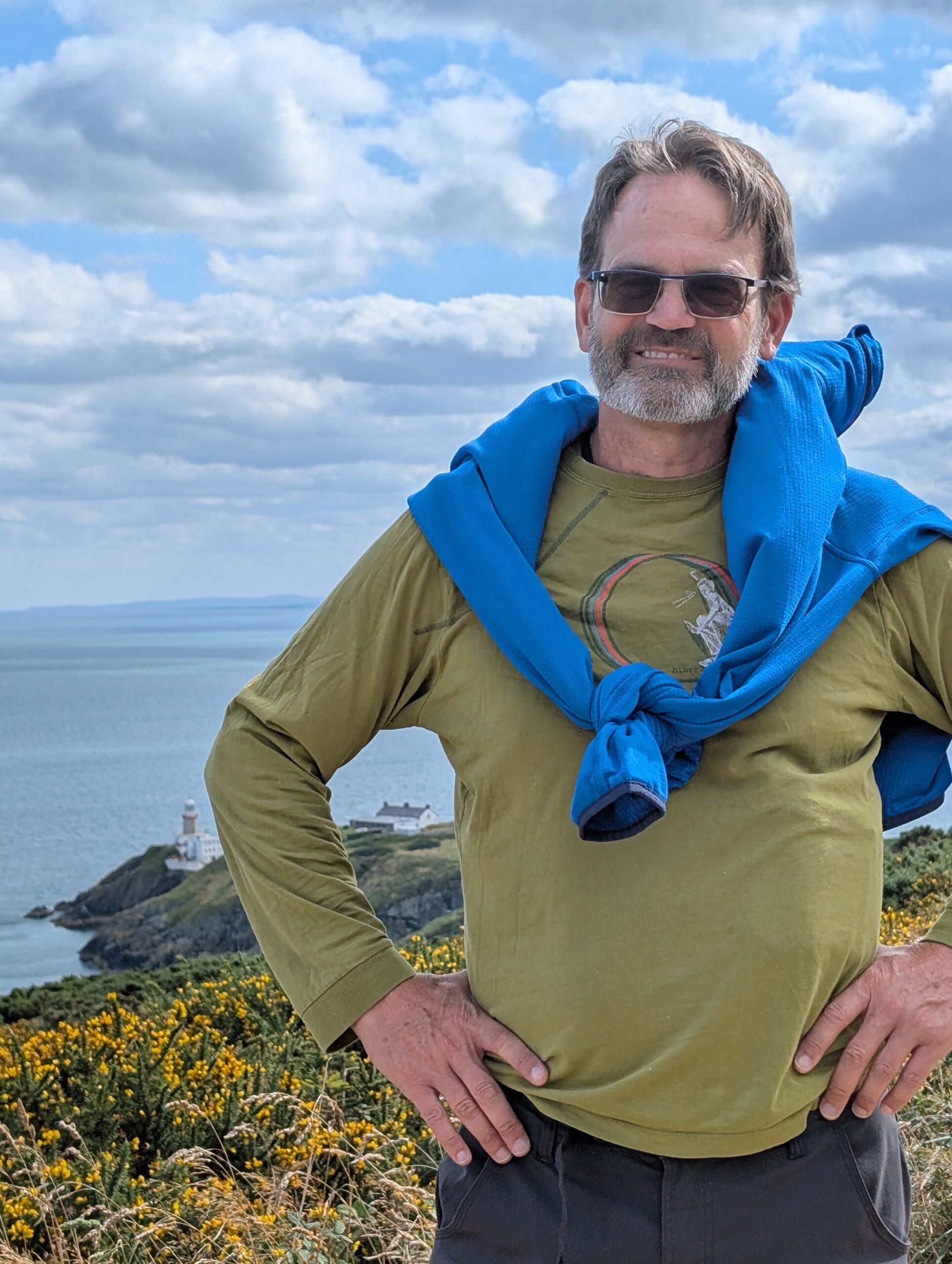
From royal palaces in Brunei and battle fields in Iraq to Alberta’s oil sands, Chris Godwaldt’s career has taken him across the globe.
But whether he worked in a throne room or a war zone, a common thread runs through the projects Chris pursued.
“I always wanted to make a difference through my work,” says Chris, who serves as the Oil Sands Alliance’s Director of Water. “I still feel that way. I can make a difference here more than anywhere else.”
The son of a police officer and a teacher, Chris grew up in the bedroom community of Sherwood Park just east of Edmonton, and went through the French immersion system for his schooling.
“I was always curious about how things work. My maternal grandfather was a farmer but had a lot of mechanical ability. He was able to fix machinery. I probably inherited that from him.”
That curiosity led him to study civil engineering at the University of Alberta, where he learned some valuable lessons both inside and outside the classroom.
“I bought a used Volkswagen Scirocco to get myself around, but one of the parts broke. I couldn’t afford the repair quoted by the shop so I jumped in and figured out how to do it myself,” Godwaldt says. “I always had that kind of mindset to figure things out, which really helped in my career.”
After starting at a Vancouver-based engineering firm working on water treatment systems, Godwaldt received an opportunity in Brunei Darussalam on the island of Borneo in southeast Asia.
“Brunei is a monarchy ruled by a sultan, who approached my employer about bringing someone over to work on water treatment systems for the royal palaces. These palaces were really like small towns with hundreds of staff. I was assigned a support role, but the senior engineer quit a week before I was to leave. They told me to book a first-class ticket and get there as soon as I could. I was now the senior engineer,” he says. “I was 22 years old and absolutely positive I could do that job. That’s the confidence of youth. I would be more concerned today than I was back then.”
Amid the opulence of jewel-encrusted fixtures and golden domes, Godwaldt found opportunities that would not have otherwise presented themselves as a young engineer.
“It was a fantastic experience from a professional point of view but also personally,” he says. “I learned a new language and culture and every day stepped out my front door into a tropical jungle. It was an experience which I could not have imagined in my wildest dreams.”
A project to revitalize water treatment facilities in Puerto Rico followed.
“I started my master’s degree at Western Ontario’s Ivey School of Business but did stints in China and then Mexico, where I studied in Spanish,” he says. “I had a desire to do something different and save the world. However, after 9/11, my plans changed.”
When the U.S. military invaded Iraq after 9/11, they quickly realized the temporary water and waste water treatment facilities being used would not hold up for a lengthy occupation. They called in civilian experts, including Chris, to help evaluate and build more permanent infrastructure.
“The plan was to support the military and then move to civilian systems, helping those really in need. I was based in Dubai but would fly into and stay in Iraq, embedded with the military. It was a live war zone, and due to ongoing shelling, I wore 90 pounds of body armour during the days and slept with it propped up next to me at night,” he says. “There was a real challenge in moving the water treatment equipment and deploying those systems in a war zone but it was important.”
Every day was a new challenge, but one experience stands out.
“Our equipment, which was supplying water to a prisoner-of-war camp in southern Iraq, stopped working and our site staff could not fix it. Under the Geneva Convention, water had to be provided, which could have meant trucking it through a war zone if we could not fix the equipment. So I flew into Kuwait. It was over 50 degrees Celsius, and a convoy of five armored vehicles got me to site in record time. I got the system back up just as the tanks were running dry.”
After finishing his duties in the Middle East in 2009, Chris returned to Canada to start working with Alberta WaterSMART, a Calgary-based non-profit group which focused on improving water management.
His work with Alberta WaterSMART eventually led to meeting with Canada’s Oil Sands Innovation Alliance (COSIA), which now serves as the innovation arm of the Oil Sands Alliance.
“The work with the oil sands really interested me because of the technical challenge, and the opportunity to improve water management at a scale I had not worked before,” says Chris, who wound up joining COSIA as an employee in 2014.
Twelve years later, Chris remains excited about what he does because of the team he works with and the impact they can make.
“Water is personal and the people I work with don’t see it as a job. I love to do what I do because it makes a difference and the people I work with feel that way, too.”