Behind the Innovation: Andrea Crook
July 30, 2026
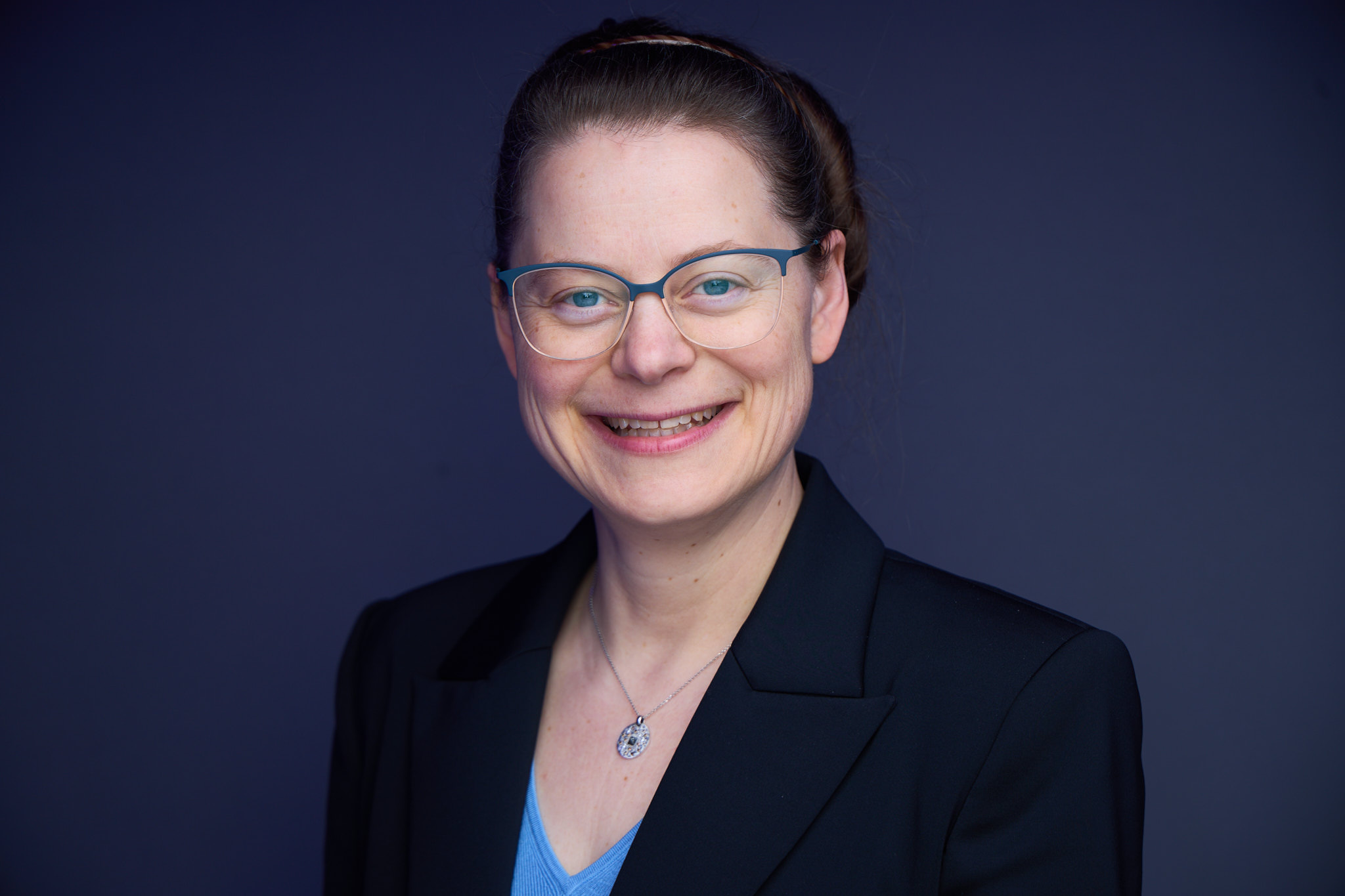
Andrea Crook’s approach to innovation is grounded in a simple principle: good data in, good data out. For more than twenty years, she has focused on improving seismic data quality. Seismic uses energy waves to create images of the subsurface to locate oil and gas deposits. As co-founder and technical leader of OptiSeis, Andrea is helping companies in Canada and around the world rethink how seismic data is collected, improving both decision-making and environmental performance.
Inspired by science
Andrea grew up in Manitoba with a love for math, physics and problem-solving. She began university in a joint physics and math program but soon realized she wanted a more hands-on career. A conversation with a career counsellor introduced her to geophysics – a field that brings together science and real-world application – and she knew she found the right fit.
She showed an early entrepreneurial spirit, teaching piano from the age of 13 to help pay for her education, and developing a passion for mentorship along the way. At the University of Manitoba, she was also the only woman in her geophysics class – an experience that helped shape her resilience and independence.
A career less travelled
Andrea moved to Calgary to start her career at Shell Canada in seismic processing. There, she noticed a pattern: many problems encountered in data processing could be traced back to how data was collected in the field.
Rather than following the usual path into data interpretation, Andrea made a deliberate shift into seismic data acquisition – the earliest stage in the process. Her goal was simple: fix problems at the source, not after the fact.
Fieldwork also revealed a second challenge. Data collection wasn’t just a technical challenge; it was also an environmental one. In forested areas, seismic programs often required clearing long, straight cut lines in rigid grids the size of city blocks, which can disrupt ecosystems and alter wildlife movement. Seeing this firsthand pushed Andrea to think differently about how seismic data could be collected.
Building OptiSeis
In 2011, Andrea and her husband Cameron founded OptiSeis, a consultancy focused on providing high-resolution, cost-effective subsurface data with a reduced environmental footprint. They built the company intentionally, adopting a virtual working model and investing in people and digital tools rather than office space before it was commonplace.
Their team of five developed a software platform, osDesign™, to optimize and automate seismic data acquisition design and planning. What began as an internal tool quickly evolved into a marketable product.
Between 2016 and 2019, OptiSeis developed a specialty in oil sands work, designing seismic programs and evaluating new technologies. This experience aligned closely with the growing industry focus – led in part by Oil Sands Alliance’s innovation arm, COSIA – on improving environmental performance while maintaining data quality. They were accepted into the international Imperial Technology Challenge for their focus on alternative geometries for seismic acquisition when the pandemic hit.
Pandemic leads to innovation
When the pandemic brought field projects to a halt, OptiSeis shifted its focus to research and development. Building on work tied to land use and environmental challenges in the oil sands, the team developed EcoSeis™.
EcoSeis™ is an innovative technology that allows oil and gas operators to capture high-resolution seismic images of their resources while minimizing surface disturbance. Developed in alignment with industry priorities identified through COSIA, the technology is a ground-breaking collaboration that integrates environmental conservation and greenhouse gas accounting into the design and execution of seismic data collection.
Traditional seismic exploration relies on orthogonal grid-based layouts that require clearing trees along straight lines, often disrupting ecosystems and increasing predator visibility for species like caribou. EcoSeis™ uses a different geometric pattern that reduces tree clearing and preserves more of the natural landscape.
Using proprietary algorithms, EcoSeis™ analyzes biological, ecological and geographic data to design customized survey layouts. The data is then collected in the field using either conventional sources or sensors to create and record energy waves, or with miniature equipment, which can further reduce the size and number of cutlines needed. Algorithms then process the data.
By placing sources and receivers more thoughtfully, EcoSeis™ can reduce land footprint by as much as 50 per cent[i] while also lowering fuel use and emissions and preserving undisturbed wildlife corridors.
At its core, EcoSeis™ reflects Andrea’s core belief: better inputs lead to better outcomes – both technically and environmentally.
Finding funding
To move EcoSeis™ from concept to reality, Andrea sought support for further research and testing. Her local MP connected her with Alberta Innovates for initial funding, but the organization required an industry partner. COSIA became that partner, connecting OptiSeis with member companies and shared challenges across the sector.
Through COSIA, OptiSeis gained access to a member-donated dataset, which helped transform a small desktop study into rigorous testing that proved the EcoSeis™ concept.
With proof of concept established, additional support enabled the next stage. The Clean Resource Innovation Network, NRC-IRAP, and COSIA funded the first technical field trial. In 2024, Emissions Reduction Alberta provided $5 million to support final commercialization testing, which is now underway.
Generative Solutions
Today, OptiSeis provides both consulting services and software, with EcoSeis™ fully integrated into its platform. The company has grown into a global network of more than 75 collaborators and four lines of business:
- Seismic Design & Consulting for 2D/3D/4D/VSP/Timelapse/Passive Seismic;
- Geoscience Consulting including Interpretation, Analytics and R&D;
- Vertical Seismic Profile (VSP) Modeling & Processing; and
- Seismic Acquisition Software (osDesign™ platform).
OptiSeis also maintains a presence at the ETC Foundation in Calgary, a convening space that brings together emerging and established players to advance innovation across the energy sector.
Andrea continues to be guided by a simple philosophy: “Do not let perfect be the enemy of good. There’s rarely one perfect solution, but progress happens when people stay curious, collaborate and keep moving forward.”
[i] [1] Oil Sands Alliance. 2024 Mine & In Situ Research Report. (Oil Sands Alliance, March 2025), p123-132, https://oilsandsalliance.ca/research/2024-mine-in-situ-research-report/.