Career Highlights: Science fairs shape a career in finding solutions
November 2, 2026
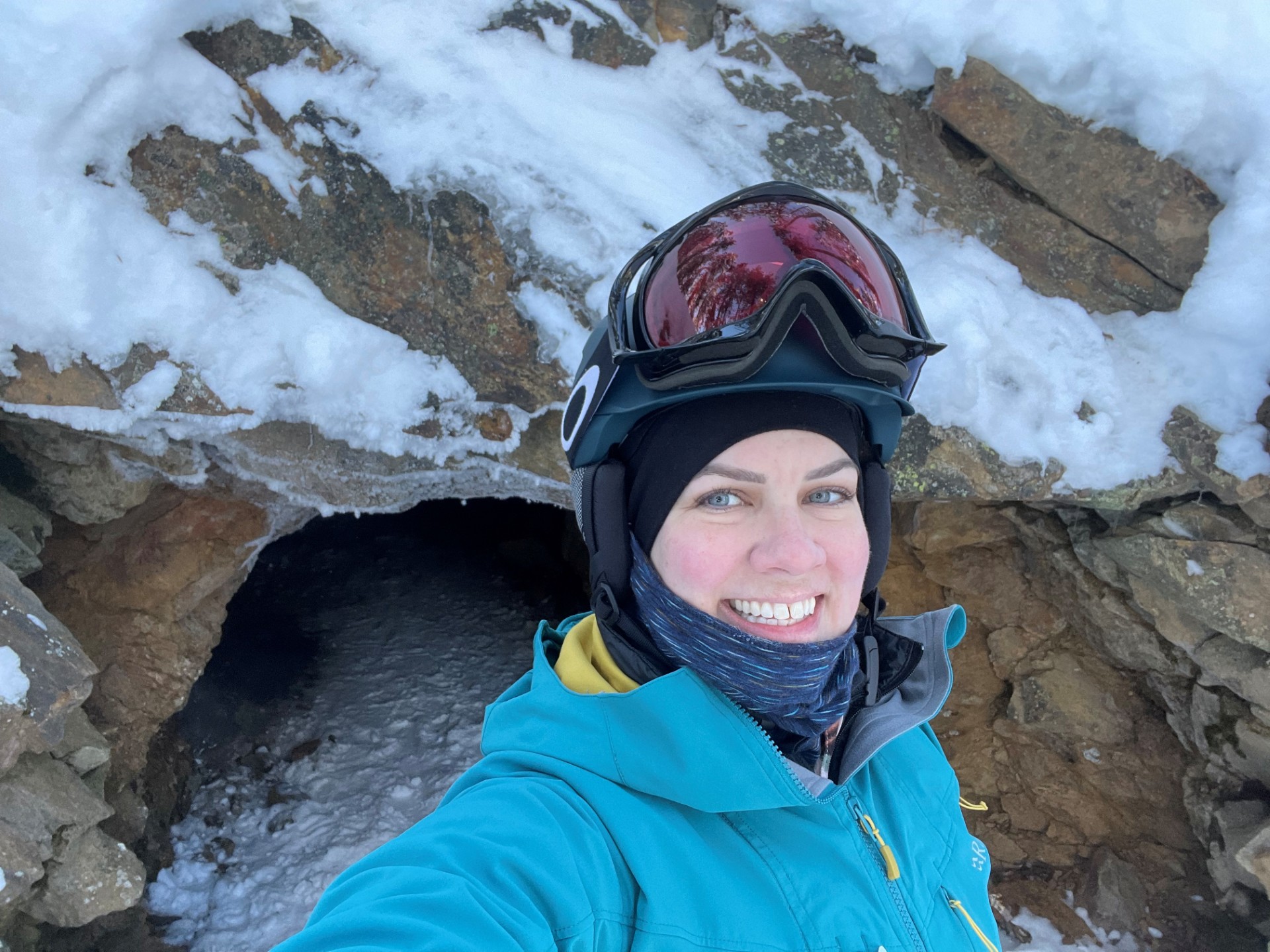
As a fourth grader, Amberly Dooley collected samples of snow around her hometown of Cranbrook, a small city in southwestern British Columbia, as part of a science fair project.
A few science projects later, she talked her way into the laboratory of a nearby lead-zinc mine in order to use the mass spectrometer to analyze the different types of components in snow samples.
“I wanted to learn more about what was in the snow samples I collected, so getting access to an assay lab seemed to be the best way to do it,” says Dooley, who now serves as Vice President of Policy and Government Relations for Oil Sands Alliance.
“I did a lot of talking my way into various places over the years for my science fair projects. I borrowed a lawnmower engine from the high school for another experiment using different octanes of gas to assess performance. I caught the particulate matter from the lawnmower using a device I made at the local muffler shop that fit around the exhaust. I then measured engine performance using Avon lipstick samples to mark vibration. The engine was returned in perfect working order, but my poor dad had to figure out how to properly dispose of all of the different samples of gasoline I tested.”
In addition to opening doors in Cranbrook, participating in science fairs opened a wider world to Dooley, who wound up competing across Canada and internationally.
“I got to travel to Whitehorse, Sudbury, Edmonton, all across Canada. I also represented Canada at World Wide Young Researchers for the Environment, which was held in Hanover, Germany, as well as the Taiwanese International Science Fair,” she says. “But it was more than travelling to other places. Competing in science fairs encourages critical thinking and problem solving. You identify a problem then seek to understand it so you can influence change or innovation. Science fairs helped me develop communication skills, including technical writing and presentation skills, which are very important to my role today.”
Those experiences shaped Dooley’s decision to pursue a degree in chemical environmental engineering at the University of British Columbia.
“My biggest influence growing up was what people told me I couldn’t do. Someone told me I couldn’t be an engineer because I was a girl growing up in a small town back in the ’90s. So, of course, I was set on becoming an engineer,” says Dooley with a smile. “I wanted to take auto shop as well as advanced biology and advanced physics, so the school ended up reworking the schedule so I could do that.”
Dooley took a job with Imperial Oil during a co-op work term, which started her career in the energy industry.
“I wound up doing their reporting for the National Pollutant Reporting Inventory, which was basically the national emissions reporting,” she says. “Then I went to Cold Lake for a summer, doing environmental monitoring with the team up there. That experience meant I got to put on coveralls, a hard hat, gloves, safety glasses, and boots, and tromp off into the bush and do things like count ducks and look for beaver dams.”
This field experience, combined with her field of study reinforced Dooley’s commitment to becoming an environmental engineer.
Almost two decades later, Dooley has maintained her passion for pursuing environmental solutions first demonstrated through her science fair projects.
“When you work inside a company or an industry, you see the opportunities to improve or to make a difference,” Dooley says. “Having that opportunity to work in the environmental and policy space within a company meant that when we saw a problem, we could proactively look to solve it and work to make changes to how we operated.”
In addition to her day job, Dooley also serves as the president of the Calgary Youth Science Fair Society.
“I’ve tried to give back to science fairs because I’ve gotten so much from them. When you’re from a small town, you don’t always have that exposure to the broader world or the opportunity to see where science, engineering and math can take you,” says Dooley, who also previously volunteered for the B.C. Science Fair Foundation and the Canada-Wide Science Fair Host Committee. “Getting to travel across Canada and internationally for science fairs played a huge part in where I ended up. That’s why it’s important to me to give back, so other students have the opportunities that I did.”