Where Science Meets Real-World Decisions: Ty Veness on Making Monitoring Matter
April 22, 2026

For Ty Veness, Director of Monitoring at Oil Sands Alliance, environmental monitoring has always been about more than data. It’s about understanding change, building trust and ensuring decisions (both big and small) are grounded in credible evidence.
“I was always drawn to applied science,” says Ty. “I wanted to work where information actually feeds into decisions.”
Born and raised in Guelph, Ontario, Ty’s path in environmental science quickly extended far beyond his home province. Over the past two decades, his career has taken him across the Northwest Territories, the Yukon, British Columbia and Alberta, gaining firsthand experience in some of Canada’s most complex and varied landscapes. Those experiences continue to shape how he approaches monitoring, especially in regions where environmental change, community priorities and industrial activity intersect.
Ty’s academic foundation reflects that practical and applied mindset. He completed an undergraduate degree in environmental sciences at Wilfrid Laurier University, concentrating on hydrology, and later earned a Master of Science through a joint program between Wilfrid Laurier University and the University of Waterloo. His graduate research focused on permafrost hydrology and water resources science, work which required integrating knowledge across systems, time scales and uncertainty. These skills continue to inform his professional work.
That philosophy of using applied science guided him through the early years of his career, beginning as a field technician and logistics manager in the Northwest Territories, followed by environmental consulting roles in northern British Columbia and the Yukon. Spending years in the field gave him a deep appreciation for the challenges of data collection in remote environments and reinforced the importance of monitoring programs that are not only scientifically sound but operationally realistic.
From there, Ty transitioned into public-sector science, joining the Government of Alberta’s Environmental Monitoring and Science Division, and held roles within the Chief Scientist’s Office. Eventually, he became program coordinator for the Oil Sands Monitoring Program (OSM), gaining insight into the complexities of multi-stakeholder governance, regulatory needs and cumulative-effects monitoring.
Ty joined COSIA, the innovation arm of Oil Sands Alliance, in early 2020 and now serves as the Director of Monitoring for Oil Sands Alliance, supporting industry participation in OSM. In this role, he focuses on governance, policy alignment and program effectiveness. He helps ensure that monitoring efforts remain fit for purpose and deliver information that regulators, Indigenous communities, industry, and the public can trust.
“I value working in an environment that’s built around collaboration and evidence-based problem solving – bringing technical understanding into policy and governance conversations, and working across different perspectives to improve outcomes,” says Ty.
What makes OSM unique, in Ty’s view, is its design. The program brings together Indigenous communities, governments and industry through consensus-based governance that incorporates diverse perspectives where all parties can find a level of agreement. It also integrates multiple knowledge systems, and operates as an adaptive program, evolving as new questions, conditions, and evidence emerge.
“When governance works well, it directly improves the quality of decisions and the credibility of outcomes,” he says.
Long‑term coordinated monitoring is essential in the oil sands region, he notes, because it allows programs to distinguish real signals from background variability over time.
“That’s where monitoring earns its value.”
For Ty, success is defined by discipline, aligned participation in OSM governance and the effective delivery of monitoring data that is scientifically credible, responsive to community concerns and useful to those making real-world decisions. This is what inspires him most about his work, the opportunity to build trust and improve decision-making.
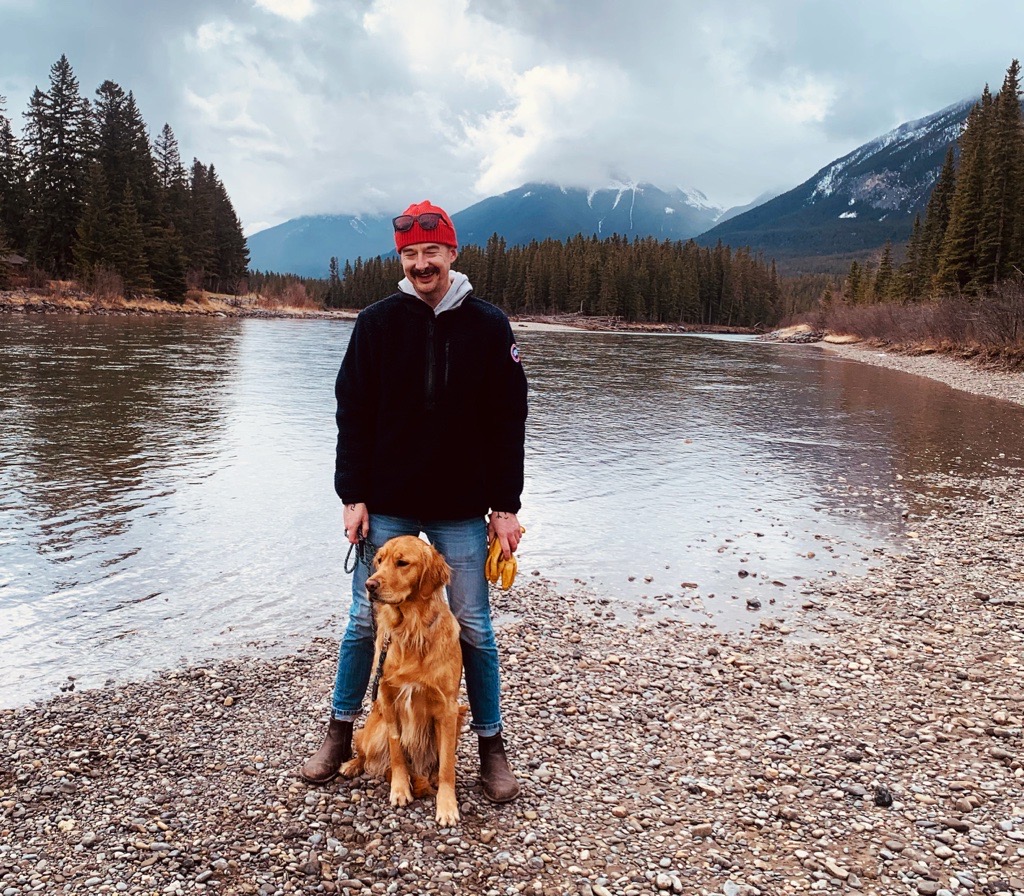
Outside of the office, Ty resets and maintains perspective by spending time outdoors with his golden retriever, Lars. “I love my dog more than anything in the world.”
He also brings an unexpected skill set to the table. He’s a commercially licensed sea captain and has experience in search and rescue on both the West Coast and in the Arctic. If he weren’t working in environmental monitoring, he says he would likely be in emergency management, drawn to roles where good information and decisiveness under pressure truly matter.
The best advice he’s ever received still guides his approach to life today. “Seek first to understand – especially when the room is tense. Clarity and trust come from listening before reacting.”
It’s a principle that fits naturally with Ty’s role at the intersection of science, governance and collaboration, helping ensure environmental monitoring delivers what it’s meant to: clarity, credibility and trust.