Learning the rules of the land
Wildlife ambassadors are helping people and wildlife safely coexist in Alberta’s busiest backcountry
May 20, 2026
Oil Sands Alliance is a proud sponsor of the 35th annual Emerald Awards for Environmental Excellence. The awards celebrate the organizations, projects and individuals across Alberta working to address environmental challenges and build a more resilient and sustainable future. Support for environmental initiatives – big or small – helps drive environmental innovation.
We’re highlighting the finalists in our sponsored category: Public Education & Outreach. Second up: Biosphere Institute of the Bow Valley for its volunteer Wildlife Ambassador Program.
If it’s brown, lay down; if it’s black fight back.
You’ve probably heard this rhyme for what to do when faced with a bear, but it’s not very reliable. Today, experts say a bear is a bear, and its behaviour is more important than its colour.
While it’s hard to pinpoint how many bears are roaming the forests, in Alberta’s Kananaskis Country, Bow Valley and surrounding areas, there’s an estimated 60 grizzly bears and more than 200 black bears. With five million visitors a year to the area, a chance encounter is probable — so it’s best to come prepared with knowledge and bear spray.
For almost 20 years, the award-winning Wildlife Ambassador Program — run by the Biosphere Institute of the Bow Valley — has been engaging thousands of residents and visitors annually in conversations at trails, trailheads, day use areas, campgrounds and at community events about everyone’s role in human-wildlife coexistence.
Nick de Ruyter, program director for the Institute’s WildSmart Program, oversees the Wildlife Ambassador Program. He says the growing number of people on the landscape increases the potential for conflict.
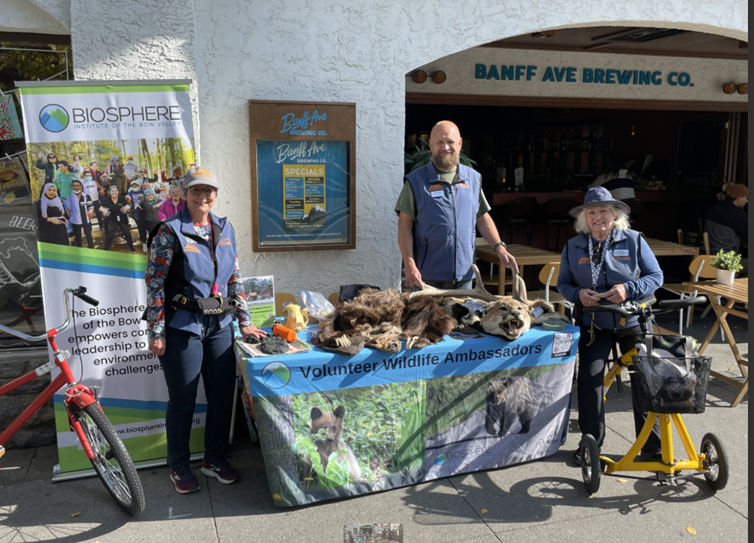
“We want to teach people the right behaviours – whether that’s how to safely respond to wildlife, how to use bear spray, or how to manage attractants like food and garbage,” he says. “Many people simply don’t know. Our ambassadors are there to educate and offer advice as needed in a friendly, non-enforcement, non-judgemental, way.”
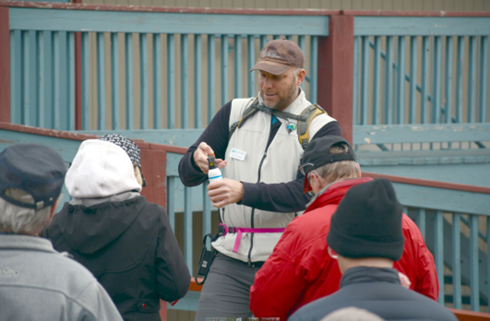
When Nick was younger, he wanted to be a veterinarian or professional athlete but instead became a pilot. With his work flying into the Arctic and managing remote mining camps, Nick became very familiar with human-wildlife interactions. He has come face-to-face with a polar bear and has seen some of the world’s most remarkable animals: narwhals (they really do exist!), wolverines, Arctic foxes, walruses, seals, grizzly bears, muskox, caribou and several species of whales.
“The wildlife and landscapes I’ve been privileged to see is incredible,” he says.
“These animals were here first, they don’t have a voice, and they’re out there living their lives. With education, I believe we can learn to coexist and enjoy their beauty in a way that’s safe for both.”
How to watch wildlife safely
- Stay away from bear closures or other dangerous behaviours for the sake of a selfie, likes and followers on social media
- Avoid creating ‘bear jams’ – traffic backups caused by people stopping to watch animals near the road
- Don’t get too close to wildlife – they’re unpredictable and it can cause them stress, which can lead to a charge or an attack
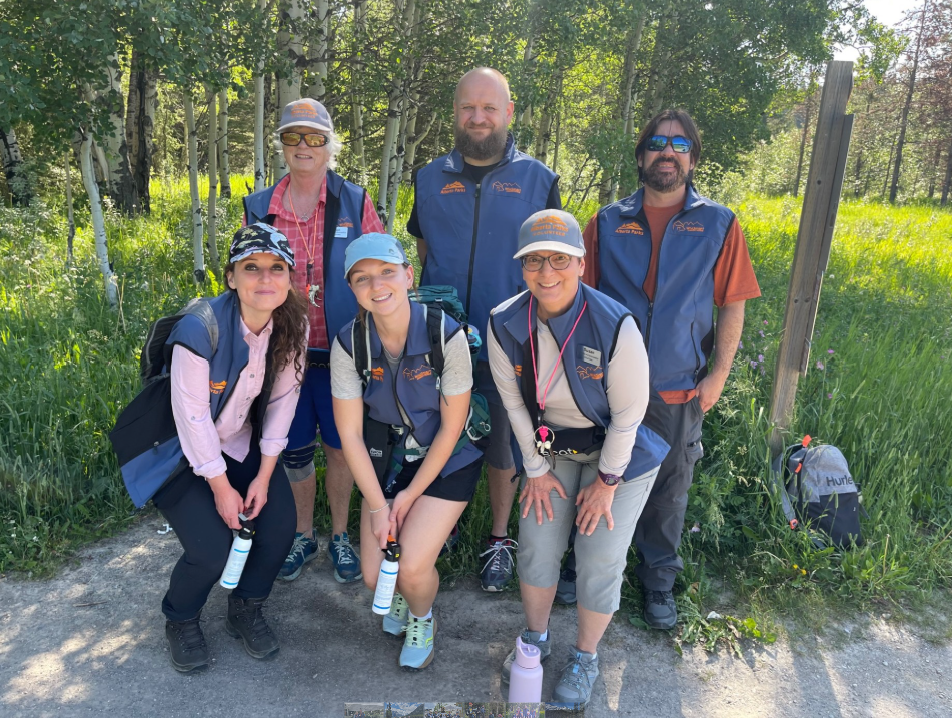
When longtime Bow Valley residents Derek Ryder and Karen Irvine first moved to the region, on their very first walk, they ran into a wolf pack at dusk with only umbrellas for protection. They bought bear spray the next day. Now seasoned Wildlife Ambassadors, they engage thousands of trail users each year on how to be safe.
“When the opportunity came up to become Wildlife Ambassadors, we jumped at the chance. We have an opportunity to advocate for the wildlife by helping others understand how to coexist with wildlife,” says Karen.
Since launching in 2007, ambassadors have contributed over 13,500 volunteer hours and engaged with over 130,000 recreational trail users, residents and visitors from across Alberta and beyond.
“Our program exists because of our volunteers – some who have been with us from the start,” says Nick. “I’m continuously impressed by their passion – dedicating hundreds of hours each year to protecting wildlife and people, and mentoring new ambassadors to grow the program’s reach and impact. It’s a remarkable model of an engaged and empowered team who successfully make a tangible impact in their community and inspire others to do the same.”